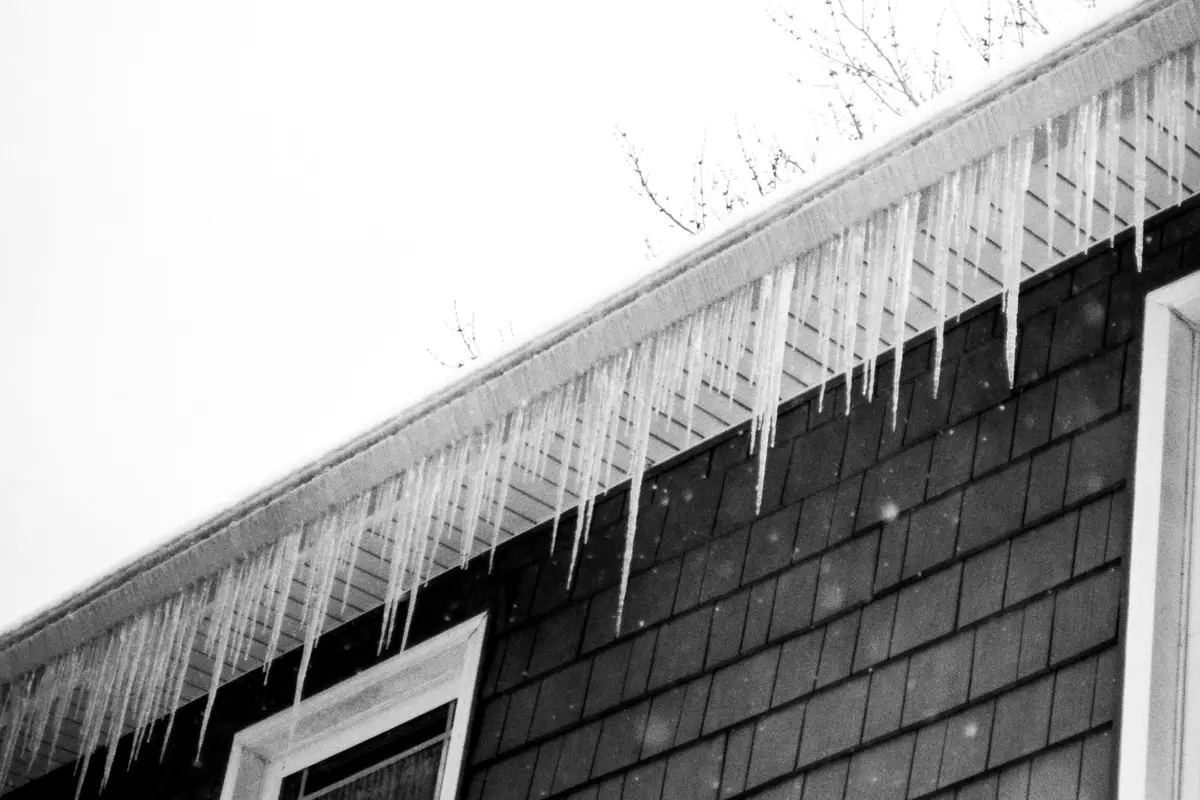
Ice dam leaks in Manchester
An ice dam is a ridge of ice at the eaves that holds melting snow on the roof until it backs up under the shingles and into the house. Fixr lists ice dam removal at $600 to $1,800, about $1,200 on average. The wet insulation and wall cavities inside are a separate job.
On this page
How an ice dam forms
Warm air from the house leaks into the attic and warms the roof deck. Snow melts on the upper roof, runs down to the eaves, which stay cold, and freezes again. The ridge grows, and the next melt has nowhere to go but under the shingles. Extension services at Missouri, North Dakota State and Michigan State all describe the same cause: uneven roof temperatures driven by heat loss from the living space.
How often the setup happens here
We counted days in Concord's long weather record when at least 6 inches of snow sat on the ground, the high reached 36°F or more, and the low that night or the next fell to 28°F or below. That melt and refreeze is what builds a dam. An average winter had 21.3 such days over the winters of 1991-92 to 2020-21 and 22.6 over the winters of 2015-16 to 2024-25, most of them in February (9.6 on average). Snowfall dropped from 67.6 to 56.5 inches a season over the same span; the thaw days didn't.
Ice dam weather: thaw-and-refreeze days with 6+ inches of snow on the ground, per winter
Inside the house
Ice dam water usually shows up as a stain at the top of an exterior wall, water around a window head, or drips from a ceiling light near the eaves. By then the insulation above is often soaked. A restoration company checks the ceiling and wall cavities with a moisture meter, removes wet insulation and drywall, and dries the framing. Wet insulation left in place holds water against the wood, and the extension services warn that ice dam water can decay framing and grow mold in attics and walls.
On the roof
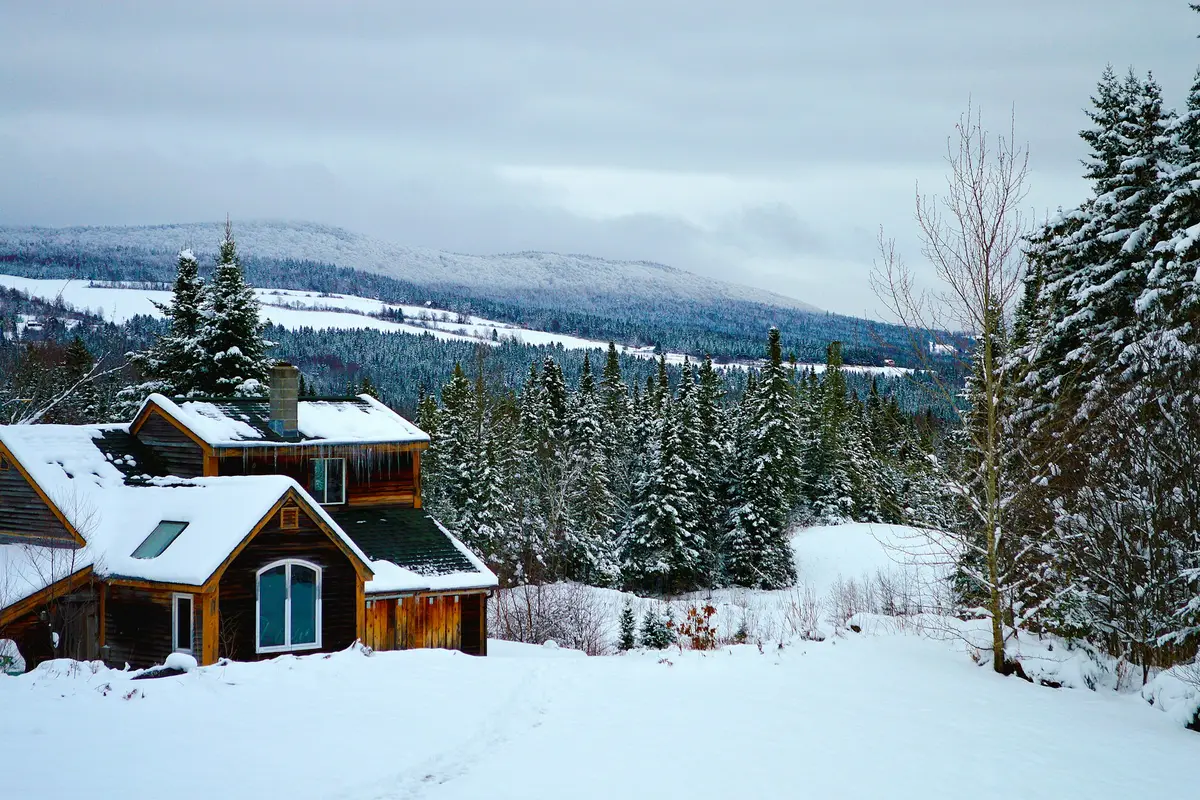
- A roof rake from the ground, pulling the first few feet of snow off the eaves, is the safe homeowner step.
- Steam removal is the professional method; Fixr lists it at $400 to $600 per hour. Chipping with a hammer or an axe damages shingles.
- Heat cable treats the symptom. NDSU's extension cautions that homeowners often reach for heat tape instead of preventing the cause.
Fixing the cause
Seal the air leaks between the house and the attic first (around plumbing and wiring holes, recessed lights and the attic hatch), then add insulation, with ventilation working alongside. Missouri Extension suggests R-38 for ceilings and roofs. That work is cheaper than a ceiling repair every February.
Questions Manchester homeowners ask
Does homeowners insurance cover ice dam damage?
Water that gets inside from an ice dam is often covered as sudden damage, while the cost of removing the ice itself may not be. Policies vary. Photograph the dam and the interior before anything is removed, and call your agent.
Should I knock the icicles down?
Icicles falling on someone are a real hazard, but knocking them off from a ladder in winter is how people get hurt. Rake snow from the ground and call a pro for the ice.
How soon after an ice dam leak can mold start?
The EPA says to dry water-damaged materials within 24 to 48 hours to prevent mold. Wet attic insulation won't dry on its own in winter, so it usually has to come out.
Sources
- Fixr: Ice Dam Removal Cost (updated January 31, 2025)
- University of Missouri Extension: Ice dams on the roof can damage your home
- NDSU Extension: Reduce Ice Dam and Icicle Damage (January 2023)
- Michigan State University Extension: Tips to prevent ice dams from forming on your home
- US EPA: A brief guide to mold and moisture in your home (updated February 18, 2026)
- NOAA Applied Climate Information System: daily data, Manchester Airport (USW00014710) and Concord Municipal Airport (USW00014745)